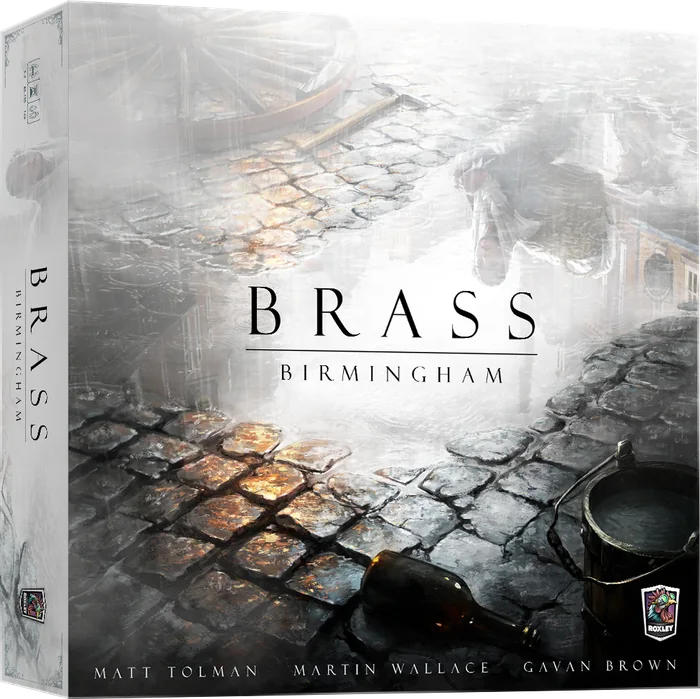
Some games sit at the top of the rankings because of hype. Brass: Birmingham sits there because a dozen plays in, you're still discovering it. This is an economic network game about building industries in 1770s England, and it is the most elegant brutal game — or the most brutal elegant game — we've ever reviewed.
How it plays
Each turn you play two cards from your hand to take actions: build an industry, link cities with canals (later, rails), develop your tech, sell goods, or take loans. The card system is the genius bit — cards limit where you can build, so every hand is a puzzle about sequencing and compromise.
The game plays out over two eras. Halfway through, all your canals are wiped from the board and the rail era begins — a structural reset that turns your early game into groundwork rather than guaranteed advantage. Few games handle a mid-game pivot this cleanly.
What makes it shine
Brass is interactive in a way most euros only pretend to be. Your opponents' industries consume your coal, flip your iron, and drink your beer — sometimes helping you, sometimes stealing the sale you'd banked on. Reading the board means reading the players.
And Roxley's production is the industry benchmark: moody Dickensian art, thick tiles, poker-weight chips. It's a game that makes people stop at the table and ask what you're playing.
Where it stumbles
The rulebook front-loads pain: your first play will be a fog of loans, beer icons and flipped tiles, and someone at the table will be half-lost until era two. It also demands the right group — with slow, analysis-prone players the back half can drag.
Who it's for
Strategy gamers, full stop. If your group finishes Catan wanting something meatier, there is a ladder — Ticket to Ride, then Wingspan, then this. Climb it, because at the top is the best pure strategy experience in the hobby.
The Verdict
The finest economic strategy game ever printed. Steep to learn, endlessly deep, and stunning on the table — worth the climb for any serious group.
What we loved
- Unmatched strategic depth with real player interaction
- Two-era structure keeps the whole game tense
- Best-in-class production values
- Every player count 2–4 works well
What holds it back
- Punishing first play; teach it carefully
- Prone to analysis paralysis with slow groups
- Not a casual buy — it will sit unplayed on a family shelf